Project Type:
Individual
Duration:
3 weeks | December 2021
Increasing
Searchability
of Instagram Posts
Increasing Searchability
of Instagram Posts
Increasing Searchability of Instagram Posts
Project Type:
Individual
Duration:
3 weeks | December 2021
Problem:
The content firehose on Instagram makes finding anything specific a painful, manual chore. Users are forced into endless scrolling through feeds and cluttered "Saved Collections," while content creators, especially brands and influencers, struggle with near-zero post SEO. This effectively buries their best content beneath hundreds of undifferentiated visuals.
Problem:
The content firehose on Instagram makes finding anything specific a painful, manual chore. Users are forced into endless scrolling through feeds and cluttered "Saved Collections," while content creators, especially brands and influencers, struggle with near-zero post SEO. This effectively buries their best content beneath hundreds of undifferentiated visuals.
Opportunity:
By bridging the gap between a purely visual feed and a functional database, we can transform post navigation and significantly amplify content reach. Our goal is simple: to make any piece of content, regardless of how long ago it was published, instantly discoverable and easily shareable.
Opportunity:
By bridging the gap between a purely visual feed and a functional database, we can transform post navigation and significantly amplify content reach. Our goal is simple: to make any piece of content, regardless of how long ago it was published, instantly discoverable and easily shareable.
Solution:
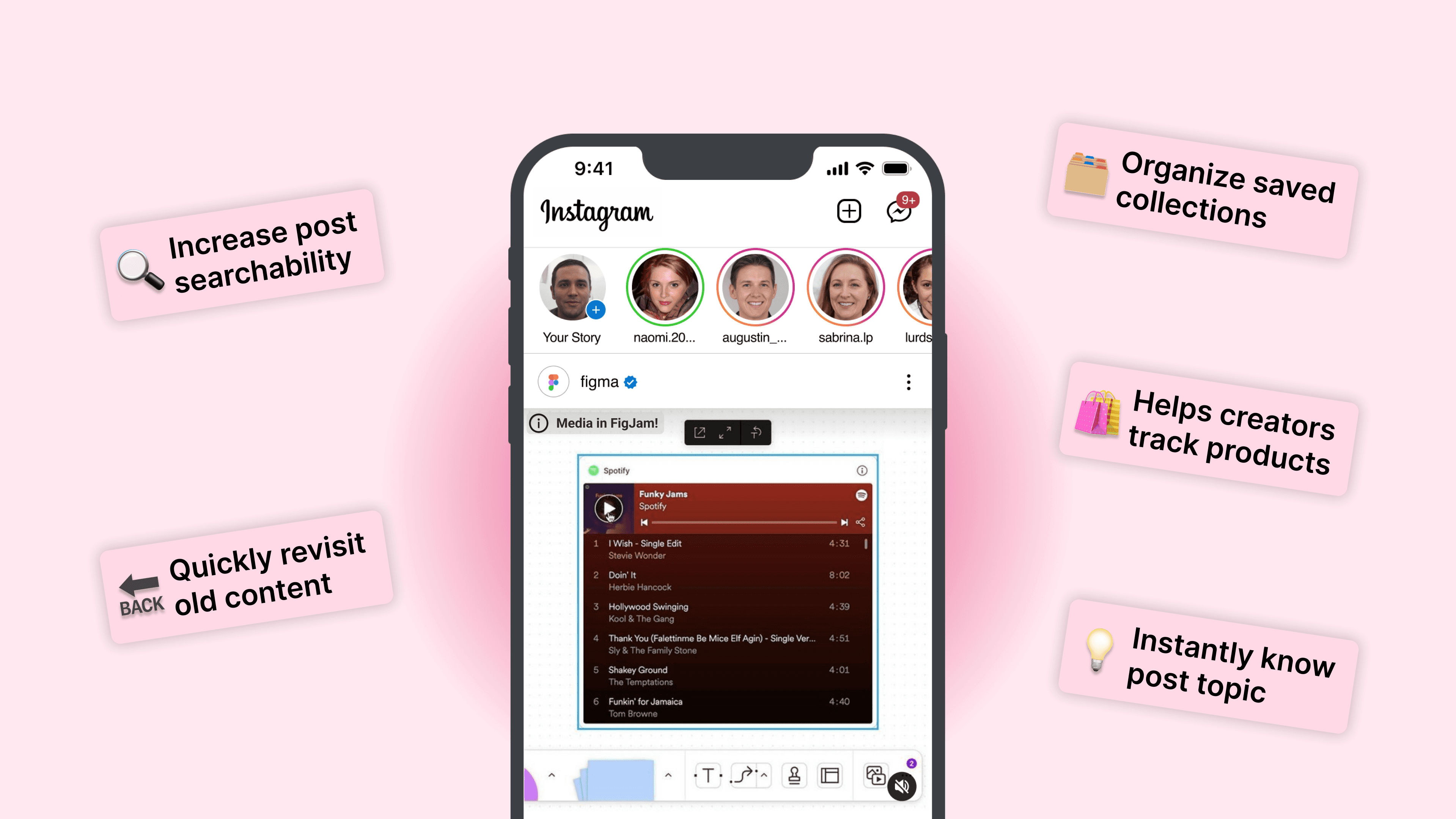
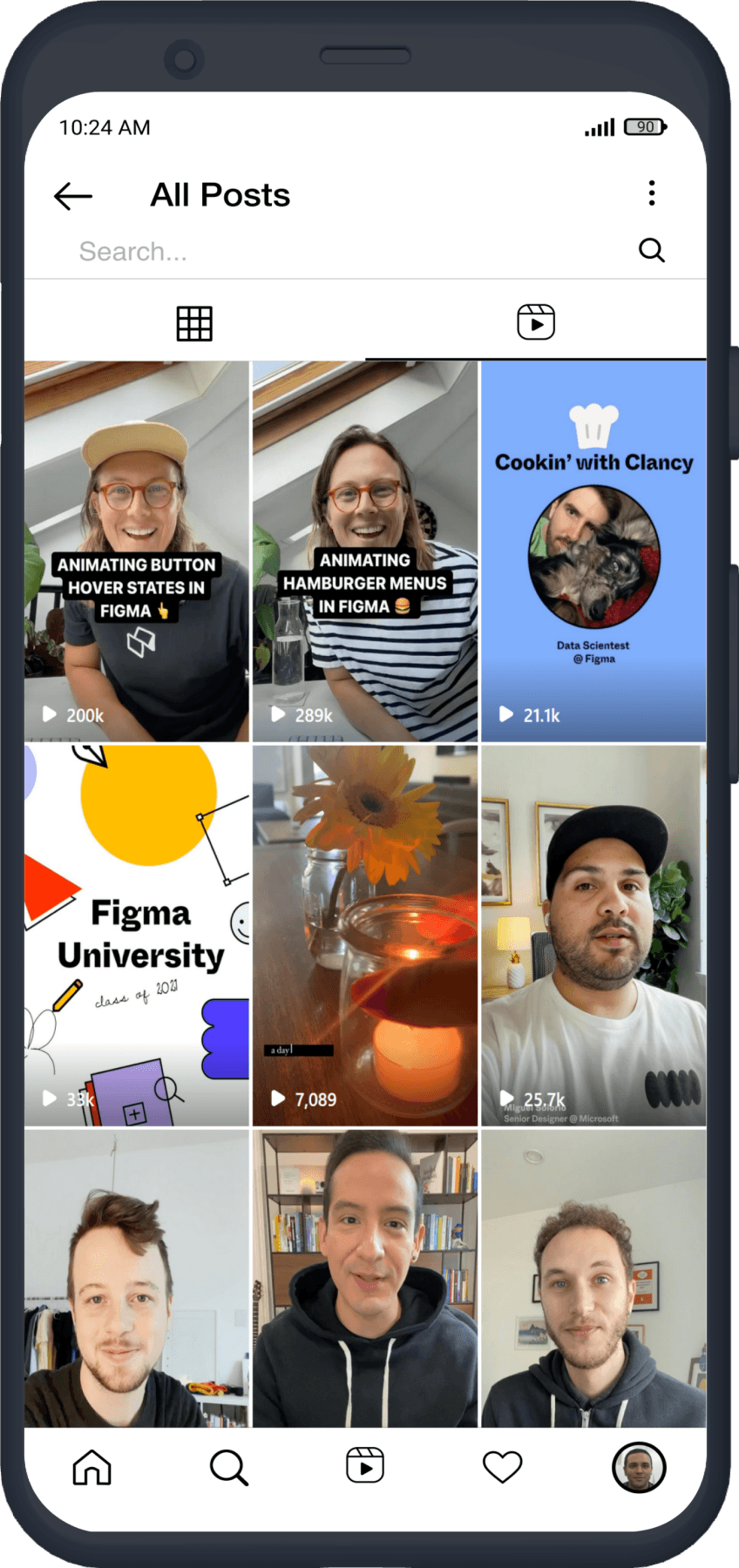
Institle is a native feature that allows users to assign a concise, searchable title to any post. This single addition elevates content identification and enables immediate, powerful search across all major platform surfaces: user profiles, Saved Collections, and the Explore page. It transforms the feed from a simple timeline into an organized, efficient information source for both the consumer and the creator.
Solution:
Institle is a native feature that allows users to assign a concise, searchable title to any post. This single addition elevates content identification and enables immediate, powerful search across all major platform surfaces: user profiles, Saved Collections, and the Explore page. It transforms the feed from a simple timeline into an organized, efficient information source for both the consumer and the creator.
Feature Demo
Want the fastest look at the solution?
Here is a brief demonstration of Institle in action, showing the core interaction and search integration.
So, it all started with a
Hypothesis
(of-course this has a backstory and a personal pain point)
To establish a clear foundation, I defined the core assumptions guiding this project. These assumptions focused on the structural gap in the current Instagram ecosystem and the predicted user behavior.
To establish a clear foundation, I defined the core assumptions guiding this project. These assumptions focused on the structural gap in the current Instagram ecosystem and the predicted user behavior.
I hypothesized that:
Increased Manual Effort: Active users (both consumers and creators) are forced to rely on excessive, high-friction workarounds (e.g., constant scrolling, external tracking sheets) to find and organize content.
Labelling posts as a solution: A simple, native title feature will solve the findability problem. It will drastically reduce search time for consumers and directly improve content SEO and business tracking for creators.
I hypothesized that:
Increased Manual Effort: Active users (both consumers and creators) are forced to rely on excessive, high-friction workarounds (e.g., constant scrolling, external tracking sheets) to find and organize content.
Labelling posts as a solution: A simple, native title feature will solve the findability problem. It will drastically reduce search time for consumers and directly improve content SEO and business tracking for creators.
Discovery &
Research
Discovery & Research
Validating Findability Crisis
Validating Findability Crisis
Before committing to a solution, I needed to prove that the problem was systemic and severe.
My research aimed to quantify the searchability gap and identify the critical needs of both consumers and creators to define the feature's scope.
Before committing to a solution, I needed to prove that the problem was systemic and severe.
My research aimed to quantify the searchability gap and identify the critical needs of both consumers and creators to define the feature's scope.
Framing the challenge (Desk Research)
Some Basic Statistics
2B
Active Monthly Users
200M
Active Brand Profiles
33 Mins
Average Daily Usage
65M
Active Influencer Profiles
Initial research established the sheer scale of content that Instagram manages, setting the context for the findability challenge:
Scale: With over 2 Billion monthly active users, content is published at an overwhelming rate. The signal-to-noise ratio is constantly worsening.
Consumer Workarounds: For the user trying to revisit a post, the current platform offers no reliable retrieval mechanism. The process relies on heavy manual effort and fragmented searching:
Searching in group chats, saved posts, or liked posts.
Attempting to remember the account and scrolling their entire profile.
Creator Burden: For content creators (brands and influencers), visibility is an uphill battle. Current efforts to increase post SEO involve significant, labor-intensive tactics:
Optimizing username, bio, captions, and hashtags.
Utilizing Alt Text (a feature primarily designed for accessibility) as a makeshift SEO tool.
This confirmed that the core problem wasn't content quality, but a fundamental lack of content structure and retrieval.
Initial research established the sheer scale of content that Instagram manages, setting the context for the findability challenge:
Scale: With over 2 Billion monthly active users, content is published at an overwhelming rate. The signal-to-noise ratio is constantly worsening.
Consumer Workarounds: For the user trying to revisit a post, the current platform offers no reliable retrieval mechanism. The process relies on heavy manual effort and fragmented searching:
Searching in group chats, saved posts, or liked posts.
Attempting to remember the account and scrolling their entire profile.
Creator Burden: For content creators (brands and influencers), visibility is an uphill battle. Current efforts to increase post SEO involve significant, labor-intensive tactics:
Optimizing username, bio, captions, and hashtags.
Utilizing Alt Text (a feature primarily designed for accessibility) as a makeshift SEO tool.
This confirmed that the core problem wasn't content quality, but a fundamental lack of content structure and retrieval.
Note: Due to a migration to a new portfolio host, the direct URLs for external statistics have been lost.
All data points in this section are based on confirmed figures from 2021 platform reports.
Validating the Pain (Quantitative Survey)
To quantify the prevalence of this issue, I circulated a Google Form questionnaire to 32 active Instagram users, including both consumers and creators. The findings provided clear justification for a solution.
To quantify the prevalence of this issue, I circulated a Google Form questionnaire to 32 active Instagram users, including both consumers and creators. The findings provided clear justification for a solution.
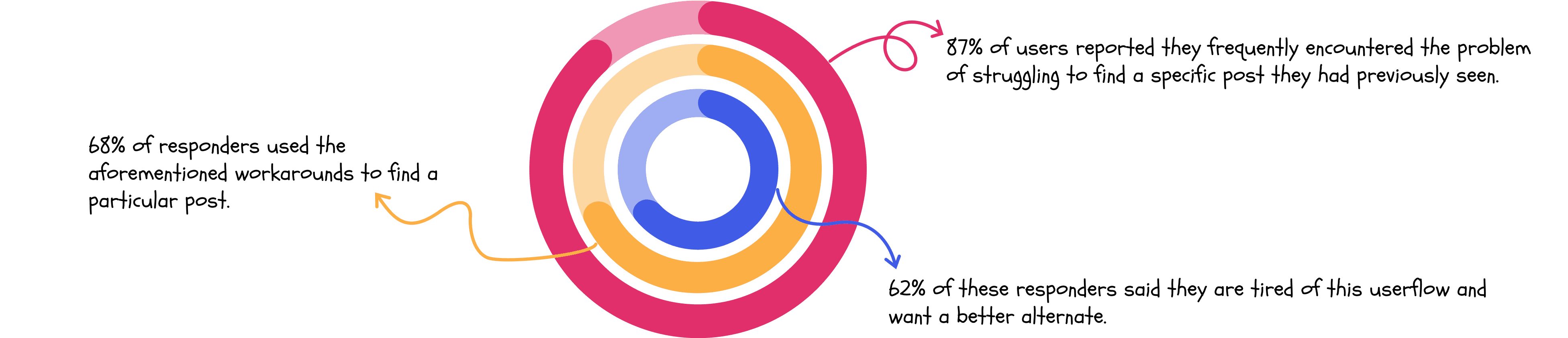
31% of responders acknowledged to this addressed problem being a major pain point in their experience.
The primary method for trying to find a post was scrolling their Saved Collections or manually searching a profile's feed, confirming the heavy manual effort required.
31% of responders acknowledged to this addressed problem being a major pain point in their experience.
The primary method for trying to find a post was scrolling their Saved Collections or manually searching a profile's feed, confirming the heavy manual effort required.
Deep Dive (Qualitative Pain Points)
I followed up with interviews with 7 key users (4 consumers, 2 small business owners, and 1 design influencer) to understand the emotional impact and specific manual workarounds that defined their experience.
These quotes and insights became the foundation for my feature requirements:
I followed up with interviews with 7 key users (4 consumers, 2 small business owners, and 1 design influencer) to understand the emotional impact and specific manual workarounds that defined their experience.
These quotes and insights became the foundation for my feature requirements:
Consumer Pain Points
The primary struggle was organization:
Difficulty managing multiple 'Saved Collections,' leading to more scrolling.
Lack of immediate context; having to click into a post to remember why they saved it.
The primary struggle was organization:
Difficulty managing multiple 'Saved Collections,' leading to more scrolling.
Lack of immediate context; having to click into a post to remember why they saved it.
Creator Pain Points (Small Businesses & Influencers)
For creators, the problem was a business challenge:
Product Tracking: "It is easier to maintain a Google Sheet to track each product and its corresponding post link rather than heavy scrolling to find it on my profile."
Content Differentiation: "My followers have to scroll through my feed to find that one post about, let's say, typography tips, that I posted a year ago. There's no way to title or label my content types."
For creators, the problem was a business challenge:
Product Tracking: "It is easier to maintain a Google Sheet to track each product and its corresponding post link rather than heavy scrolling to find it on my profile."
Content Differentiation: "My followers have to scroll through my feed to find that one post about, let's say, typography tips, that I posted a year ago. There's no way to title or label my content types."
The interviews established that the feature needed to serve two masters: provide easy organization for consumers and offer a systemic search and discovery tool for creators.
The interviews established that the feature needed to serve two masters: provide easy organization for consumers and offer a systemic search and discovery tool for creators.
Conceptualizing
Conceptualizing
Defining the Feature's Scope
Defining the Feature's Scope
My research clearly validated the need for a structured data layer but left the question of how to implement it.
I explored three main concepts, measuring each against the core goal: delivering high search accuracy without requiring users to leave the Instagram ecosystem.
My research clearly validated the need for a structured data layer but left the question of how to implement it.
I explored three main concepts, measuring each against the core goal: delivering high search accuracy without requiring users to leave the Instagram ecosystem.
Concept 1:
A Separate Link-Saving App
This solution was quickly deemed inadequate because it forced users to rely on an external platform. The core pain was finding the post on Instagram; an external link manager is simply another manual workaround that adds friction and fails to solve the fundamental problem of in-app search.
This solution was quickly deemed inadequate because it forced users to rely on an external platform. The core pain was finding the post on Instagram; an external link manager is simply another manual workaround that adds friction and fails to solve the fundamental problem of in-app search.
Concept 2:
Searching for Caption Keywords
Leveraging existing caption text for search was attractive due to low implementation cost. However, captions are often long, verbose, and filled with non-essential details or excessive hashtags. Using them for retrieval would result in poor, inaccurate search results that quickly frustrate the user, violating the goal of search accuracy.
Leveraging existing caption text for search was attractive due to low implementation cost. However, captions are often long, verbose, and filled with non-essential details or excessive hashtags. Using them for retrieval would result in poor, inaccurate search results that quickly frustrate the user, violating the goal of search accuracy.
Concept 3:
Add Subject / Title to the post
A short, focused title serves as the highest-intent piece of metadata for any post. It is concise, relevant, and directly increases discoverability.
This approach successfully met all the project's goals:
Search Accuracy: Provides a clean, focused keyword for indexing.
Ecosystem Integration: Functions natively within the existing interface.
Scalability: Allowed the new search feature to be implemented across every major touchpoint: Profiles, Saved Collections, and the Explore Tab.
A short, focused title serves as the highest-intent piece of metadata for any post. It is concise, relevant, and directly increases discoverability.
This approach successfully met all the project's goals:
Search Accuracy: Provides a clean, focused keyword for indexing.
Ecosystem Integration: Functions natively within the existing interface.
Scalability: Allowed the new search feature to be implemented across every major touchpoint: Profiles, Saved Collections, and the Explore Tab.
Wireframing
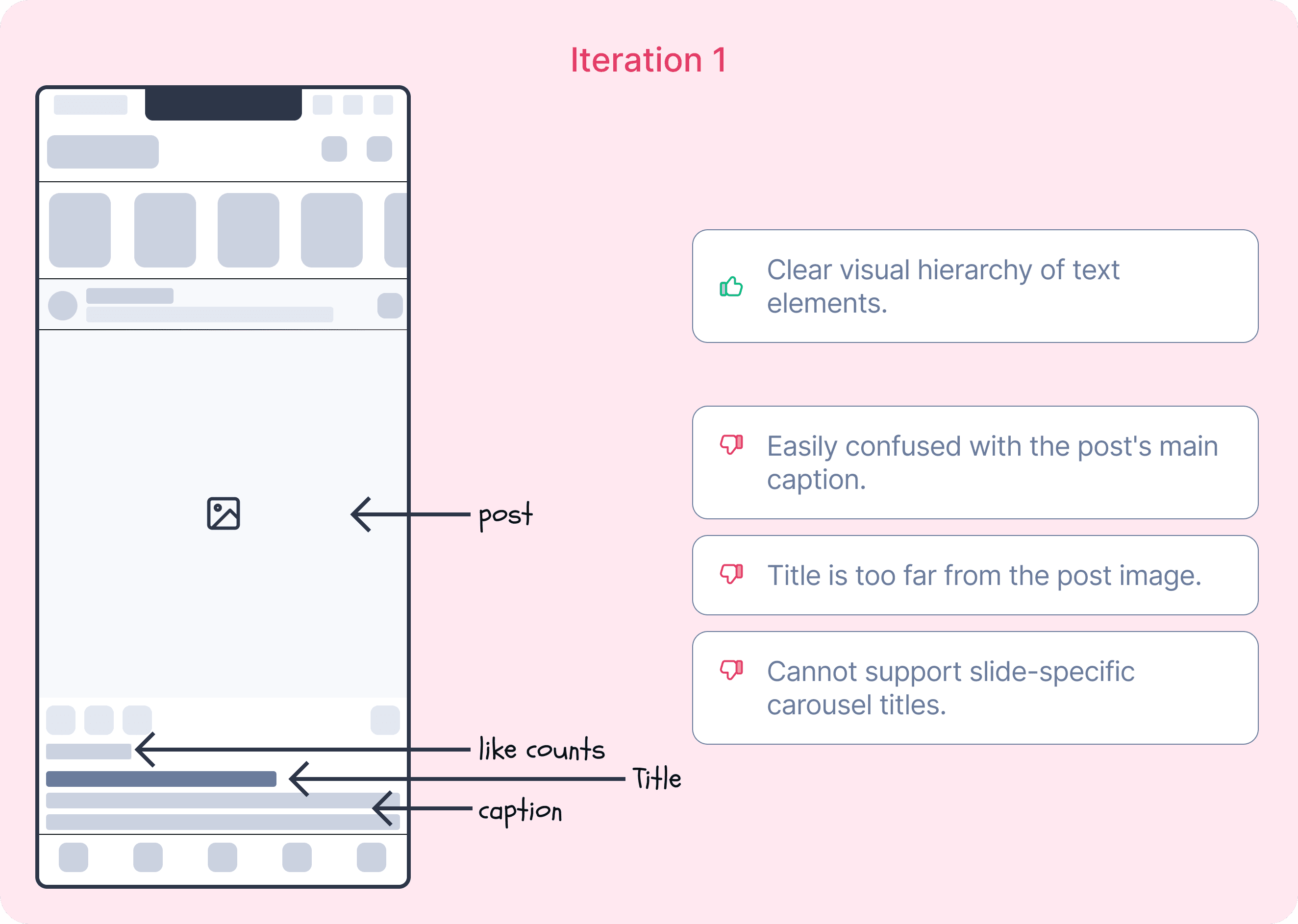
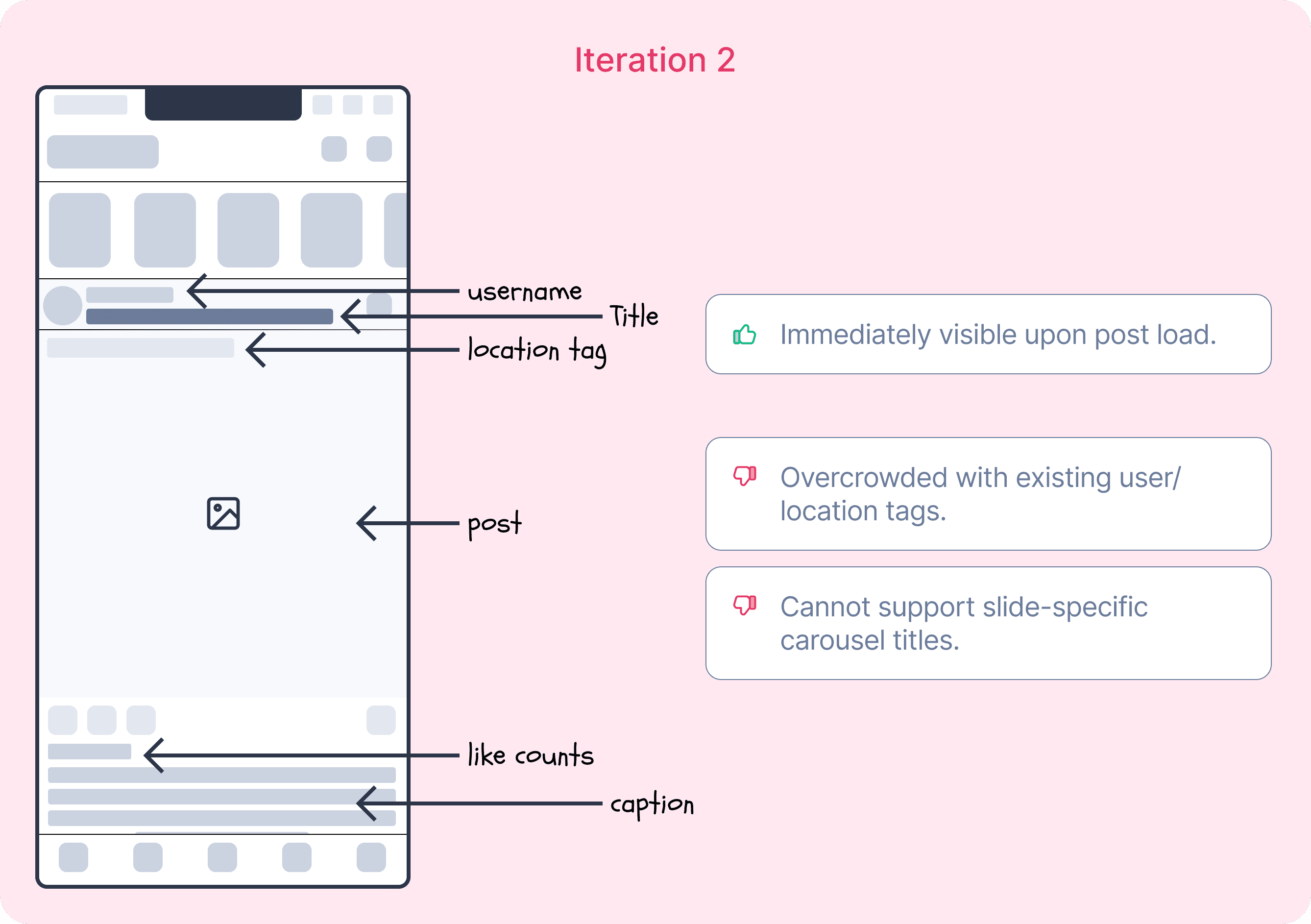
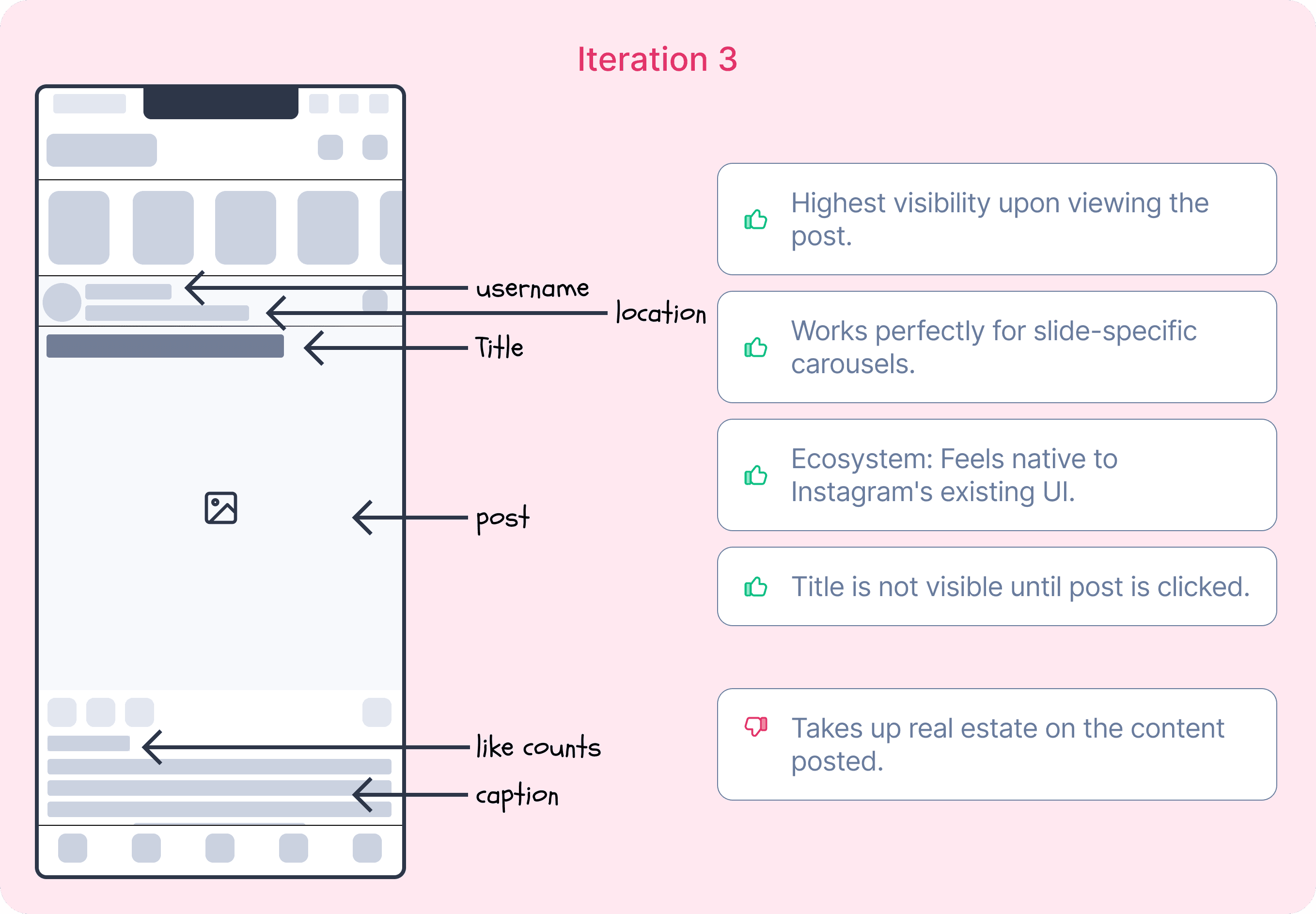
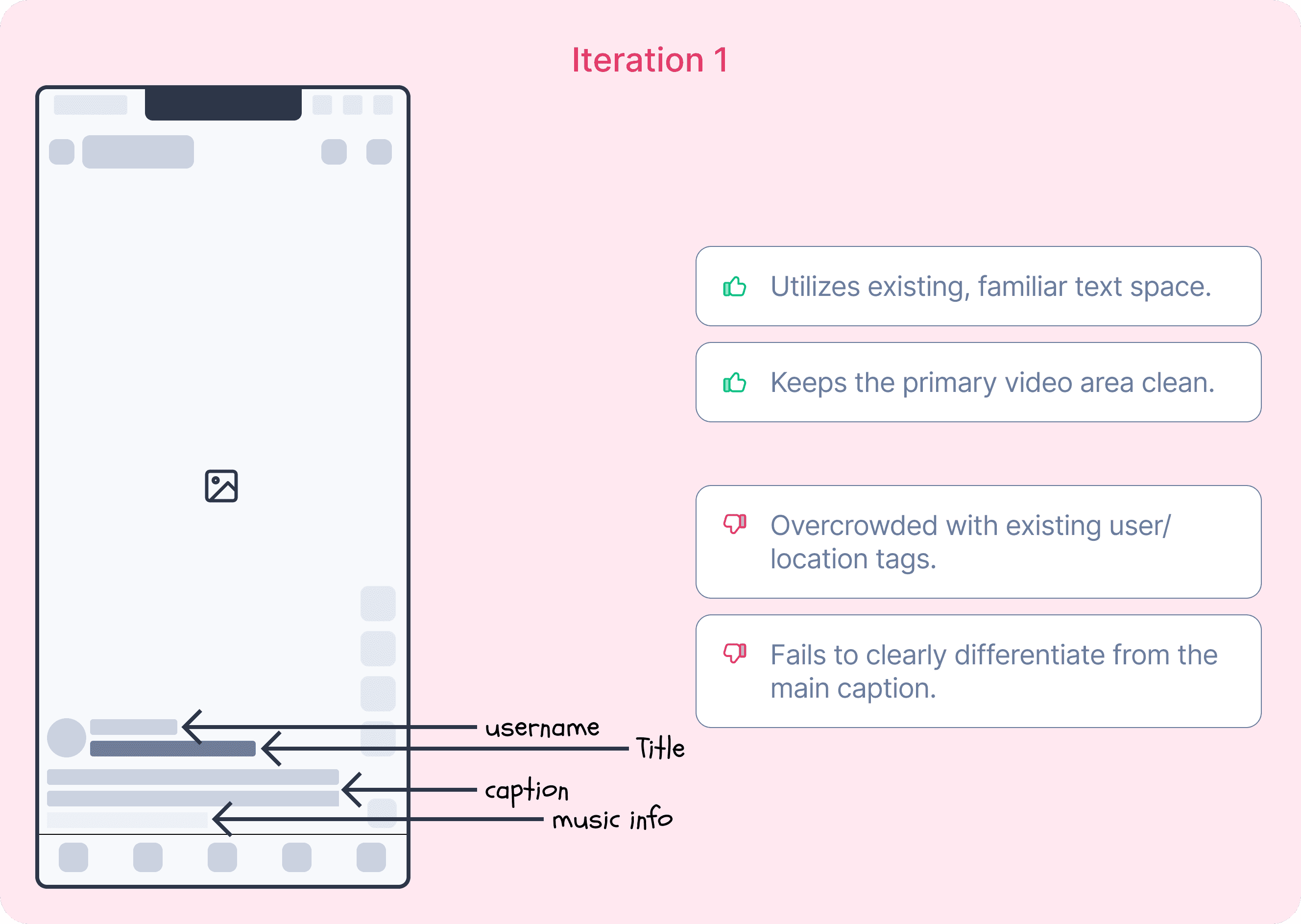
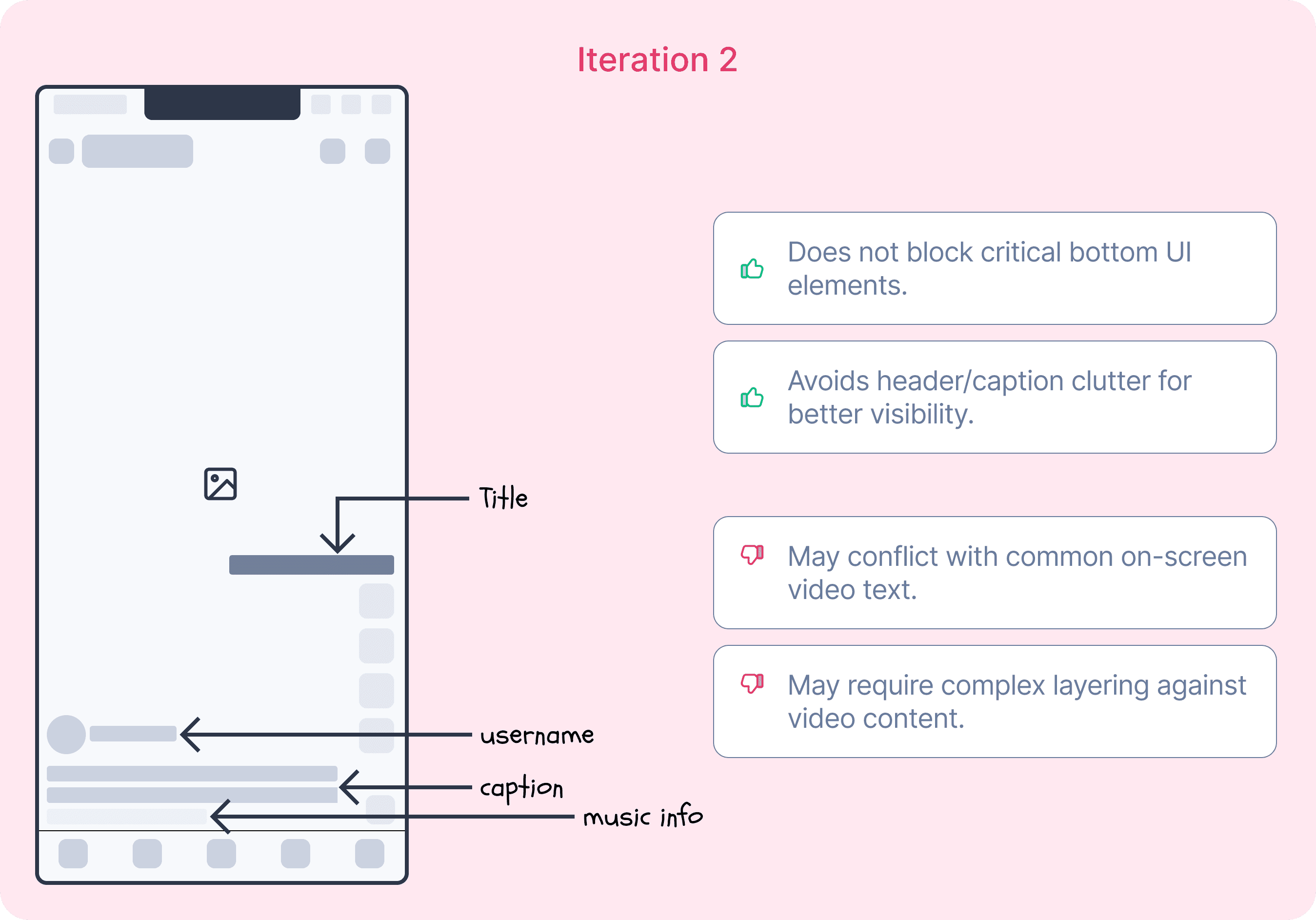
With the conceptual decision finalized, the next step was to define the precise placements and interaction models to ensure Institle provided maximum visibility without disrupting the existing, familiar Instagram interface.
With the conceptual decision finalized, the next step was to define the precise placements and interaction models to ensure Institle provided maximum visibility without disrupting the existing, familiar Instagram interface.
Iterations for Photo Posts
Iterations for Reels
Hi-Fi Design
Making it come alive
Following extensive layout iterations, it became clear that no single placement was perfect. By circling back to Institle's main goal, I moved forward with the options that offered the strongest alignment while documenting the remaining design compromises.
Following extensive layout iterations, it became clear that no single placement was perfect. By circling back to Institle's main goal, I moved forward with the options that offered the strongest alignment while documenting the remaining design compromises.
Institle on Photo posts
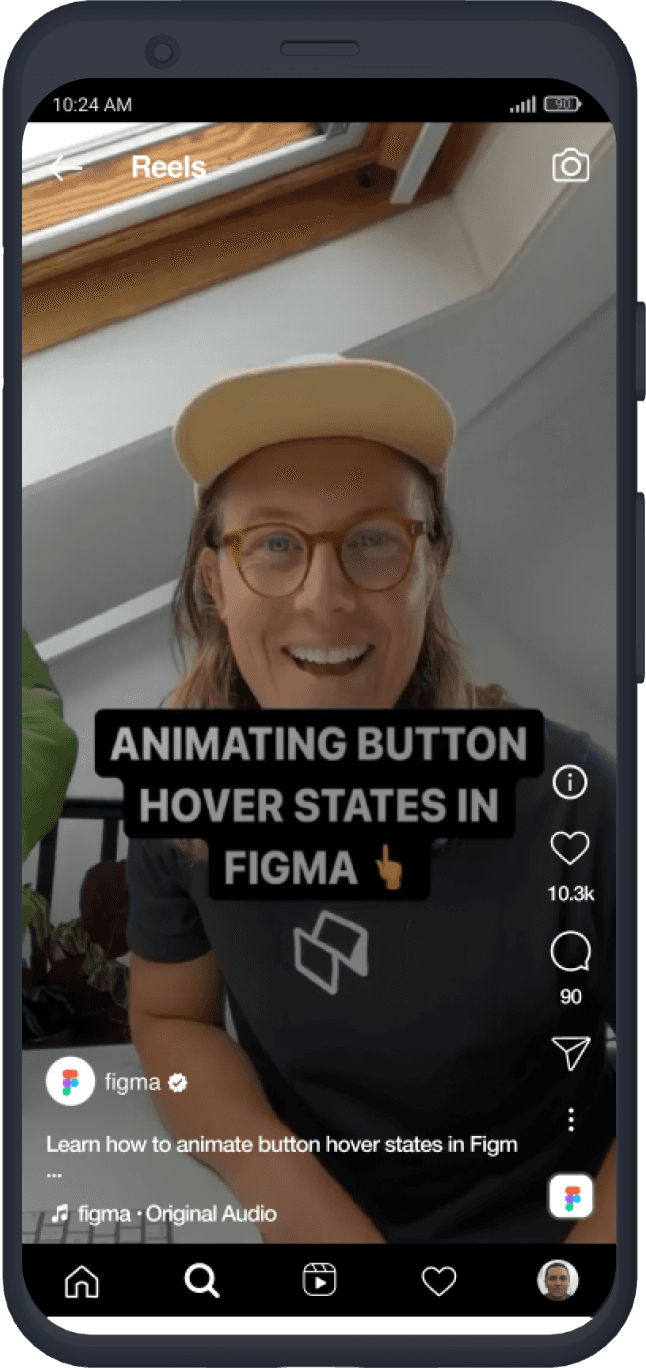
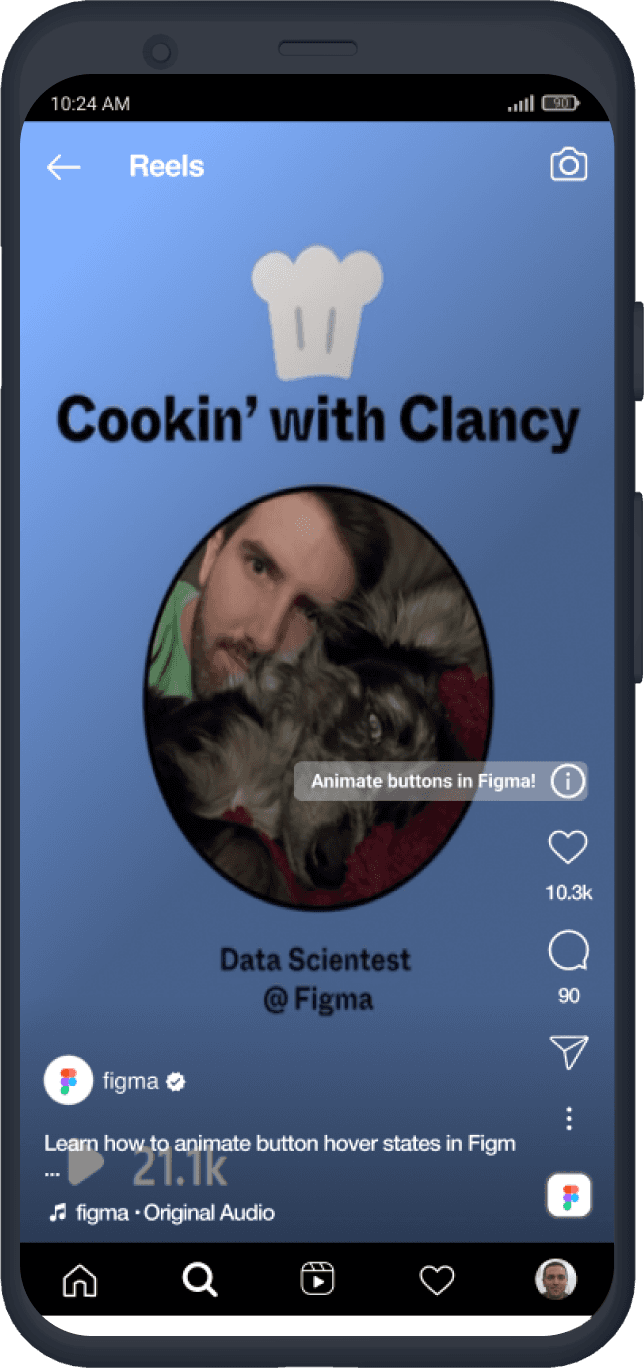
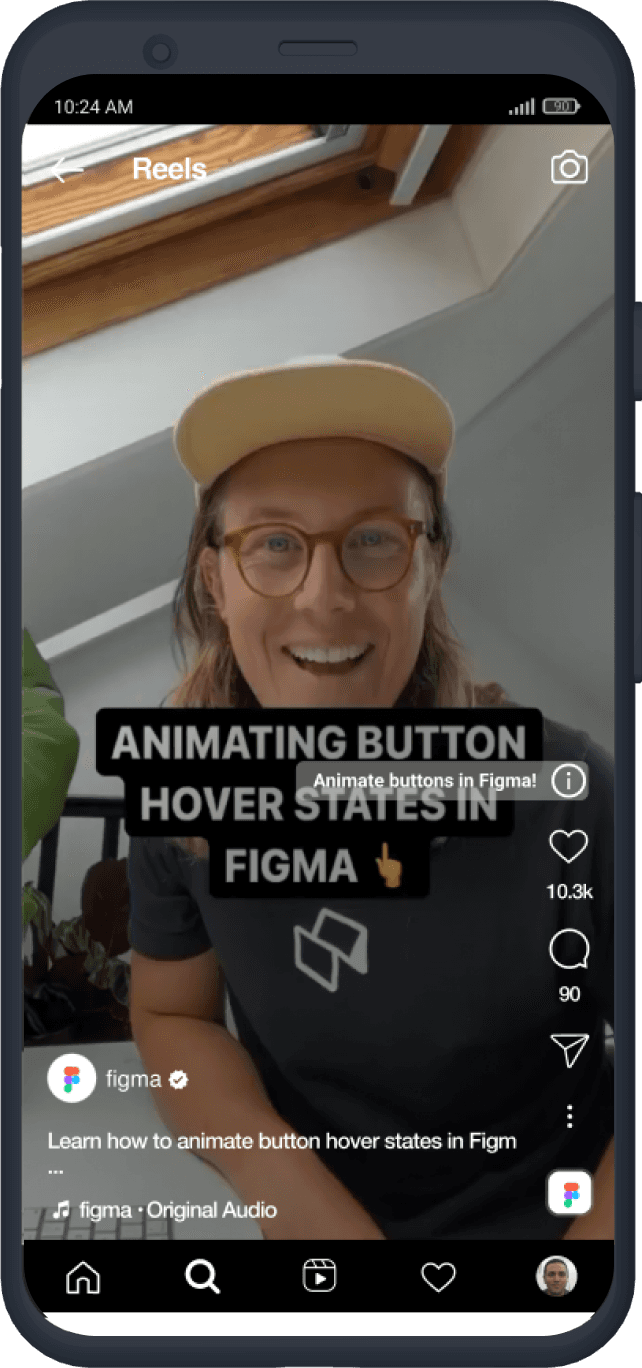
Institle on Reels
Flow 1: Institle Creation (The Posting Flow)
Flow 1: Institle Creation
(The Posting Flow)
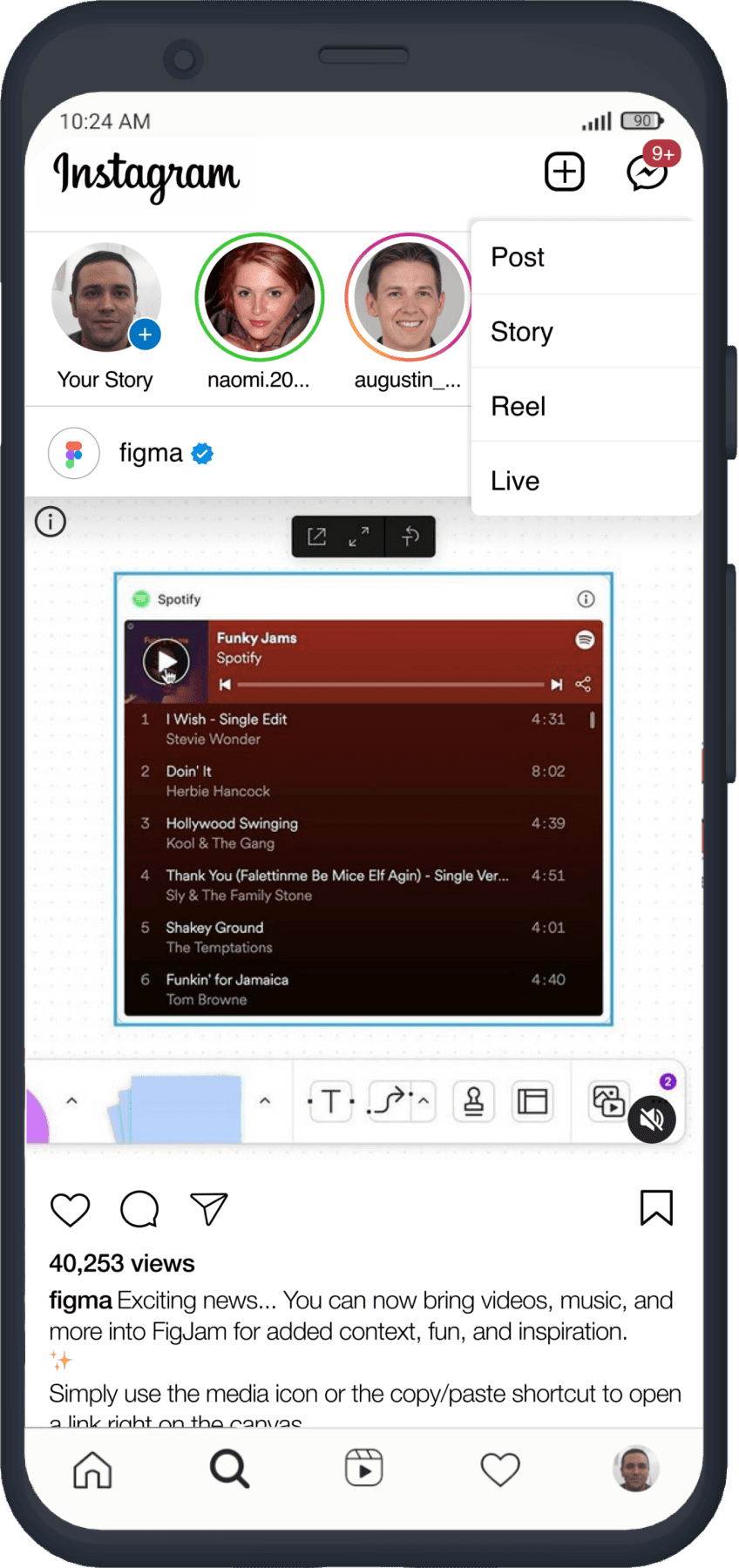
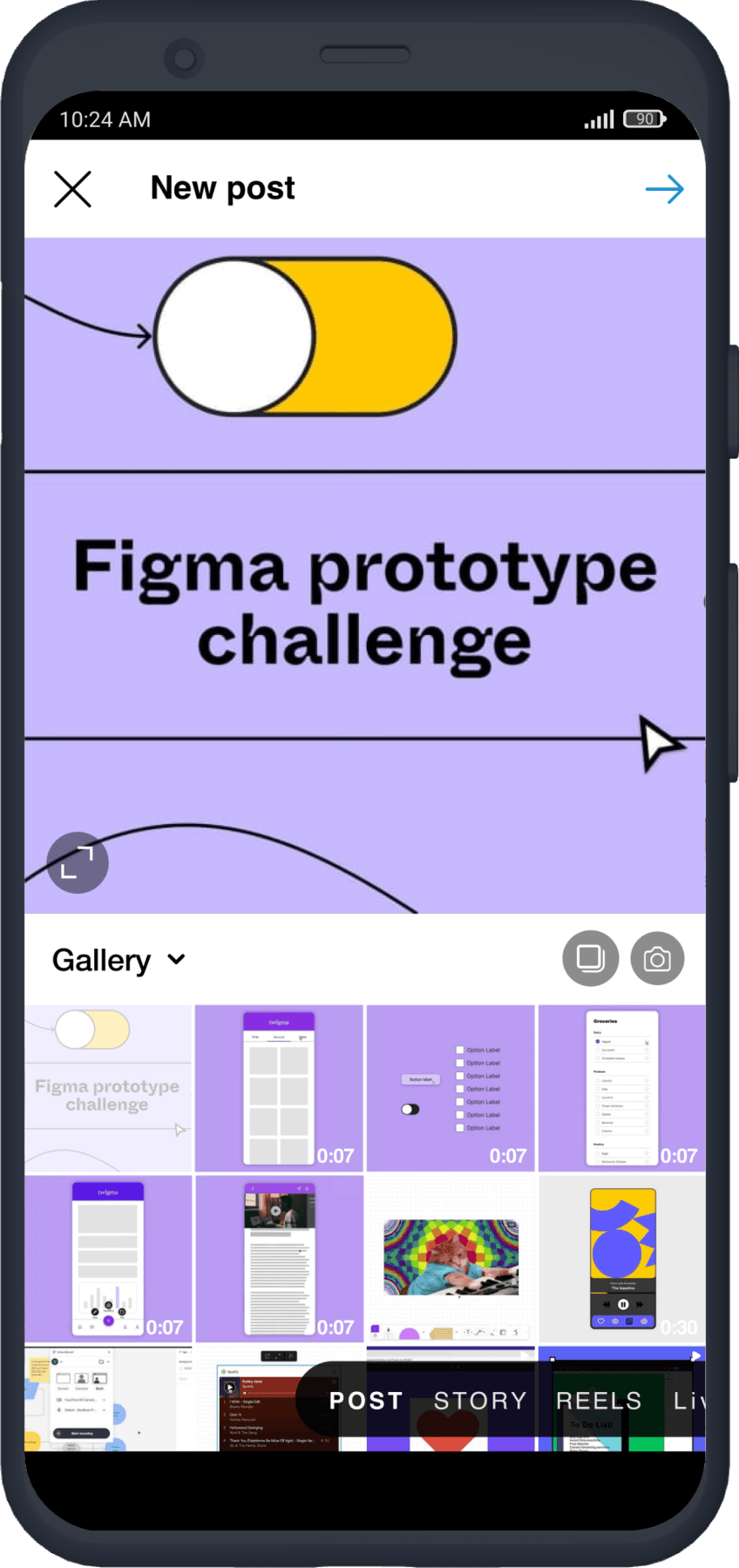
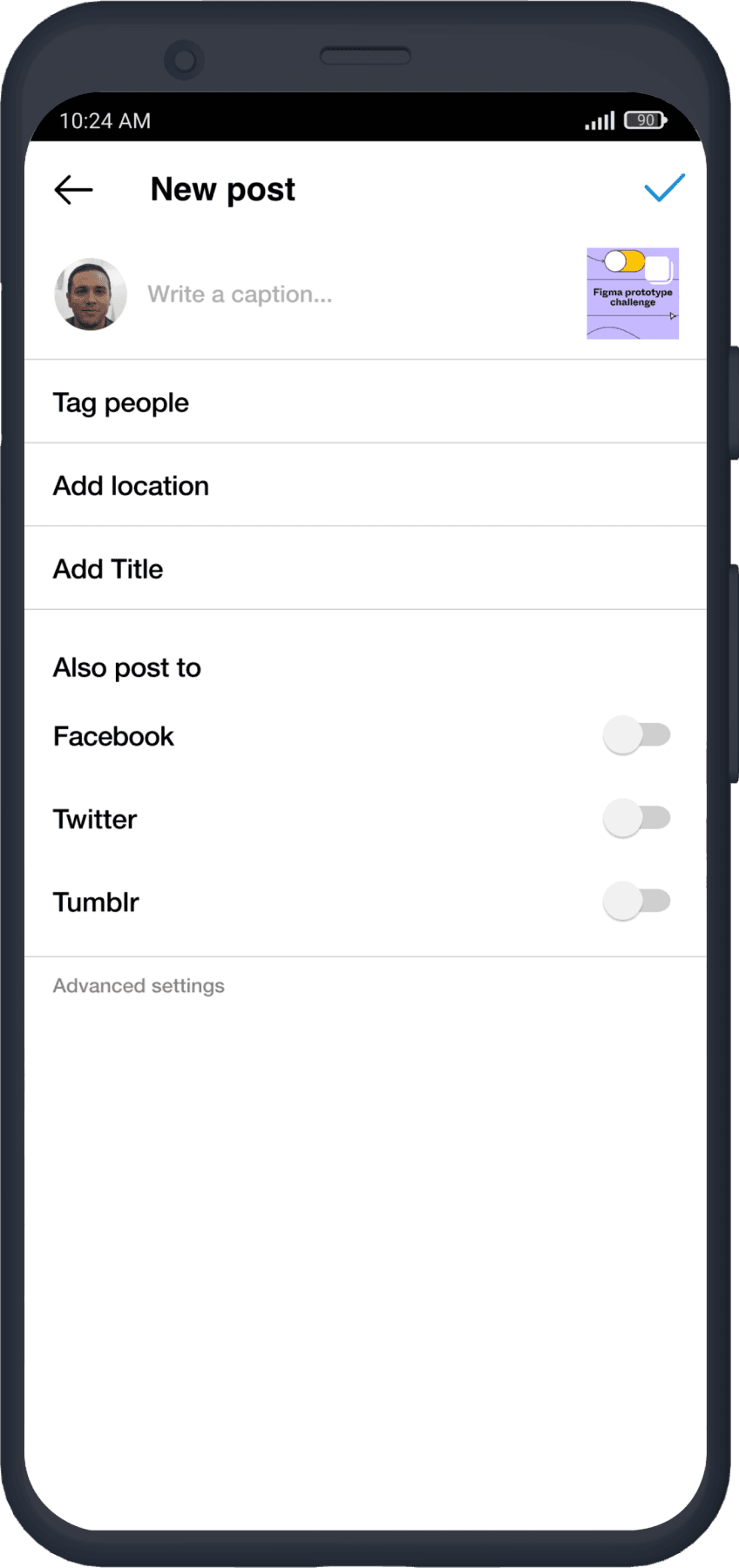
Institle needed to be a low-friction addition to the existing posting experience.
Institle needed to be a low-friction addition to the existing posting experience.
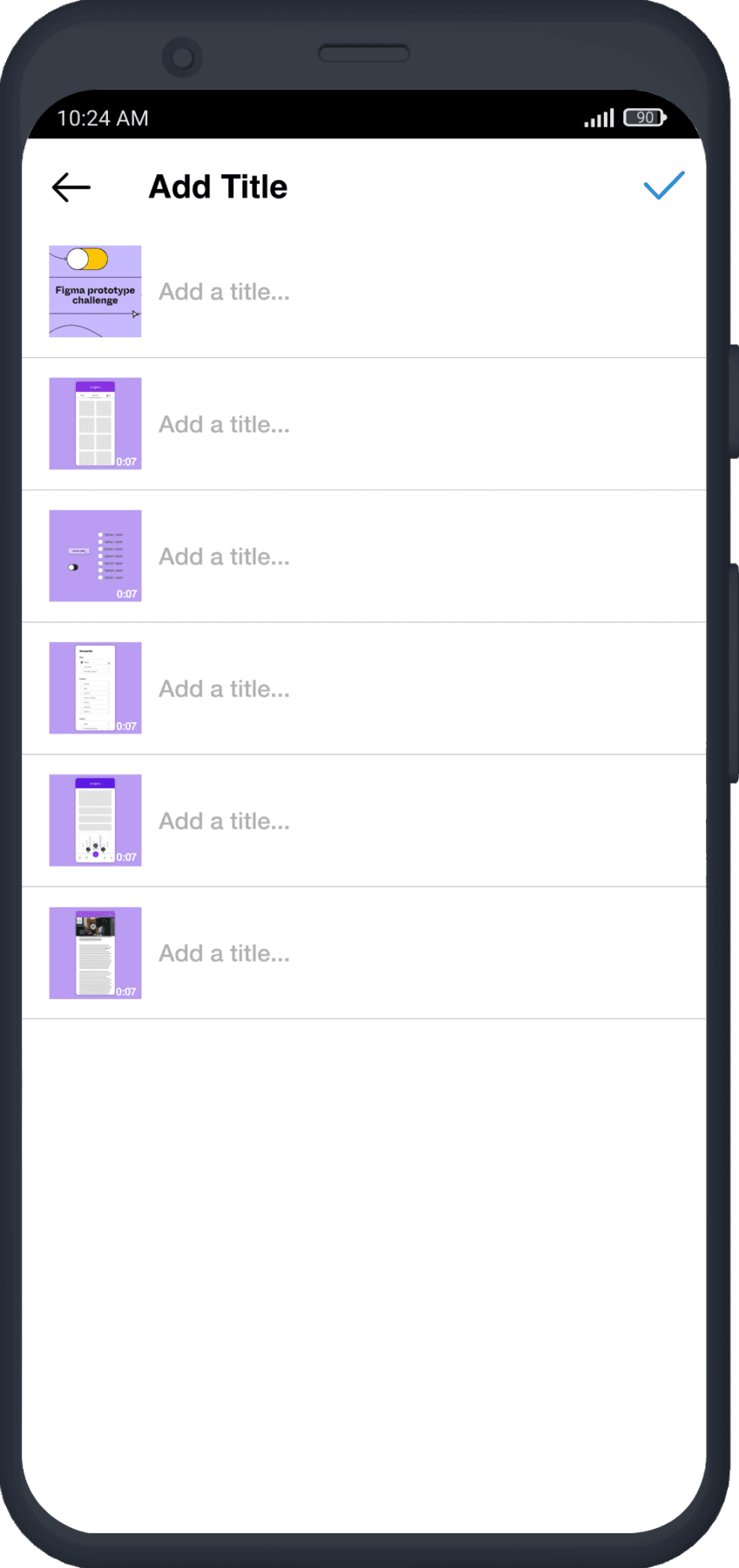
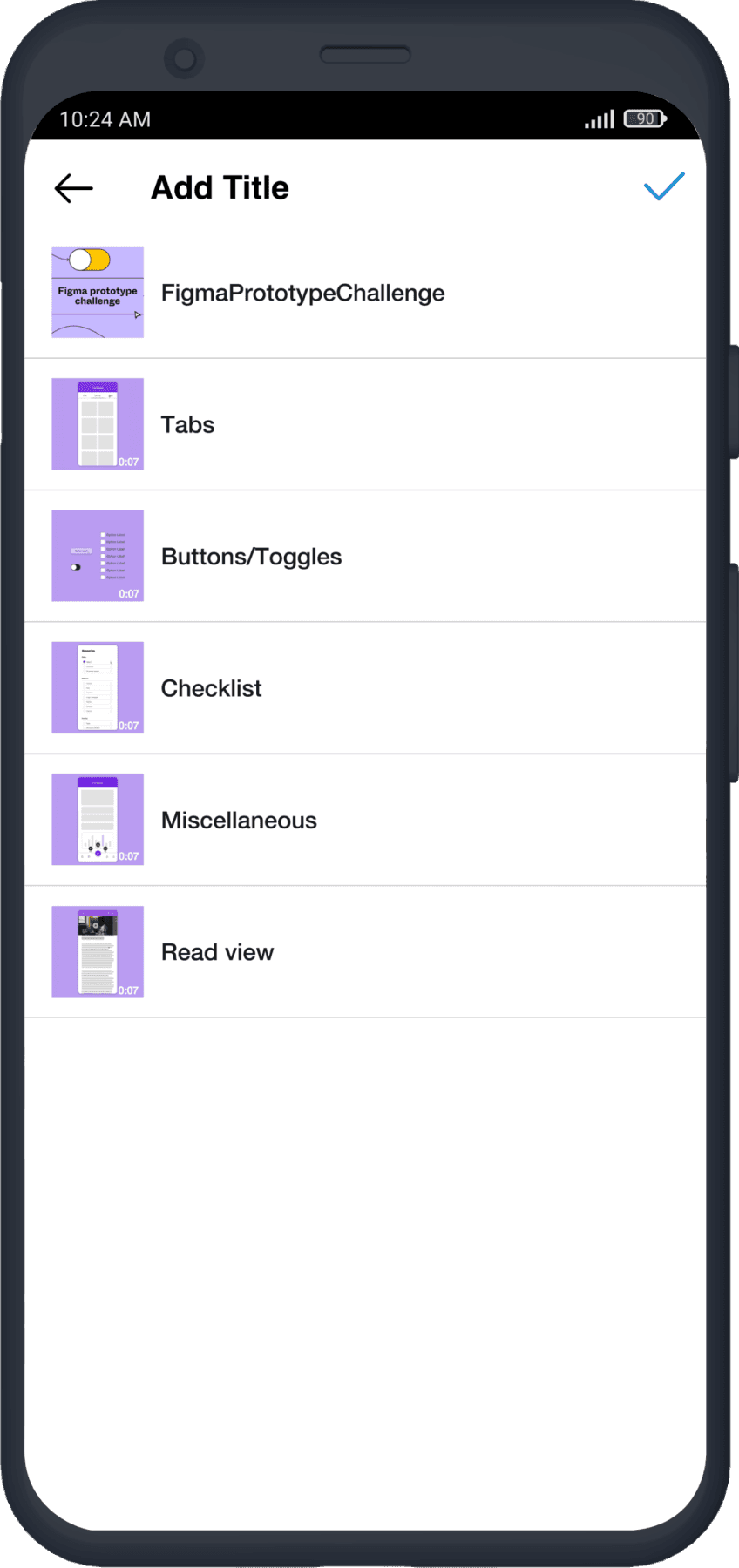
To maximize visibility and SEO value, the title is added in the Finalization Step and is limited to 50 characters to ensure conciseness.
To maximize visibility and SEO value, the title is added in the Finalization Step and is limited to 50 characters to ensure conciseness.
Flow 2: Searching for posts in Explore and User Profile
Flow 2:
Searching for posts in
Explore and User Profile
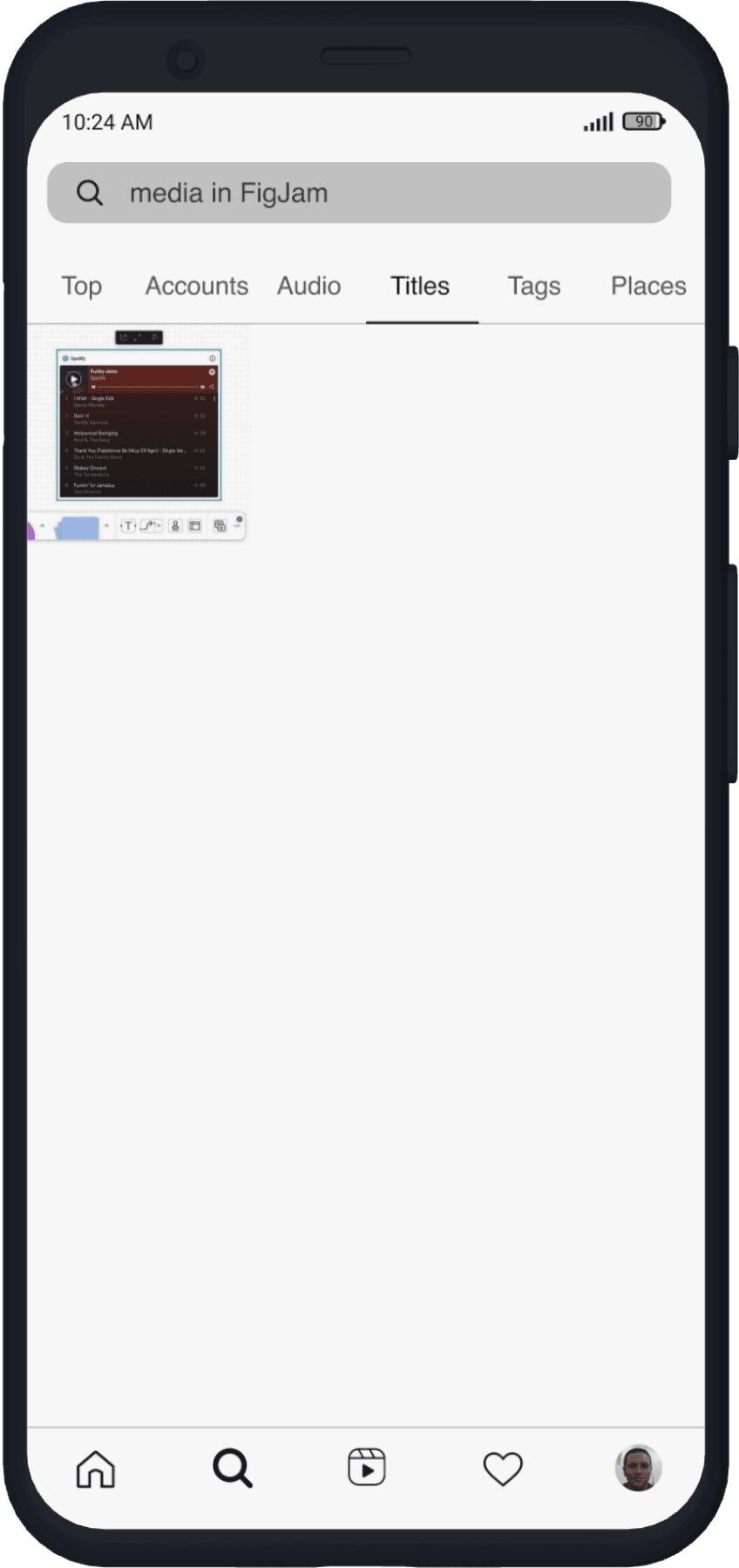
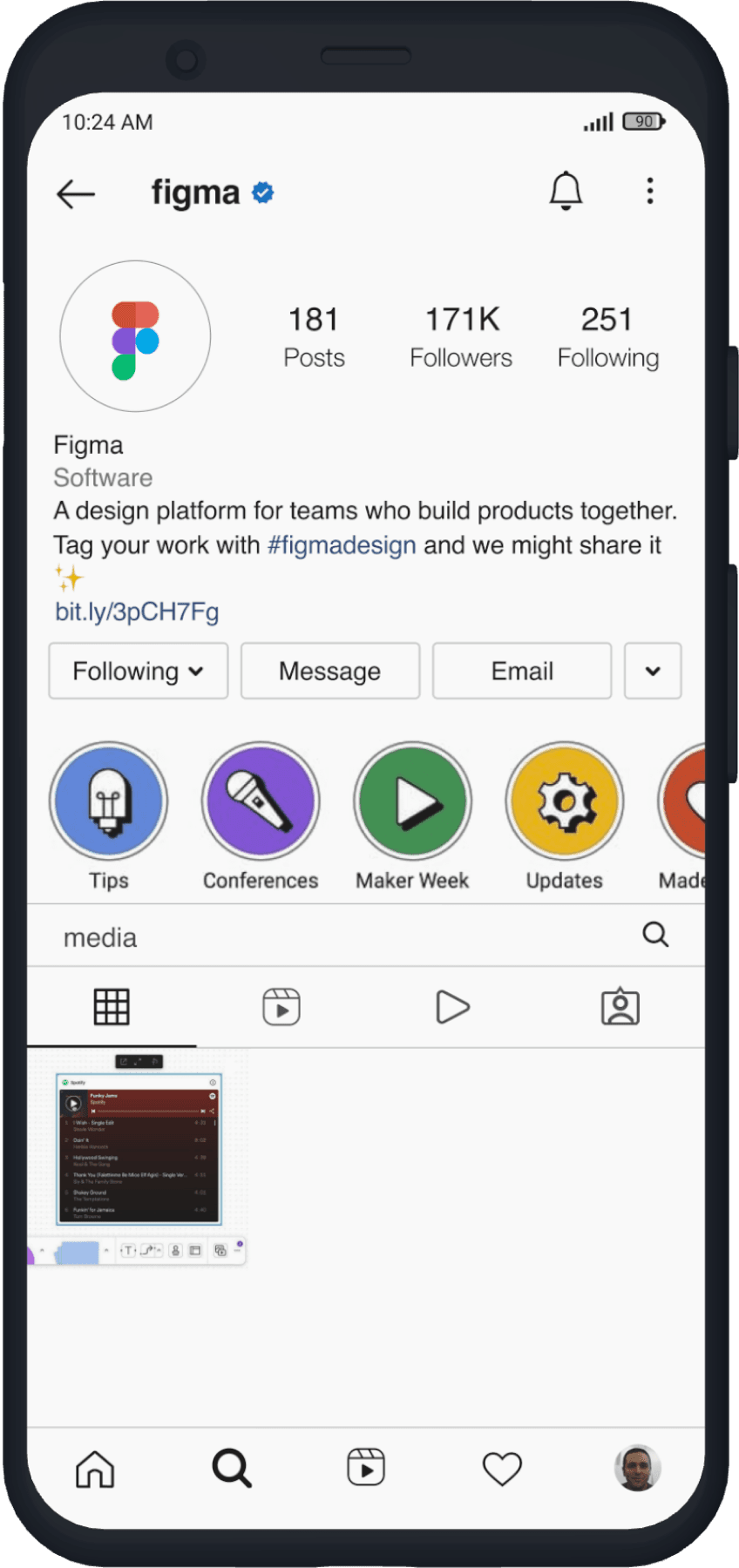
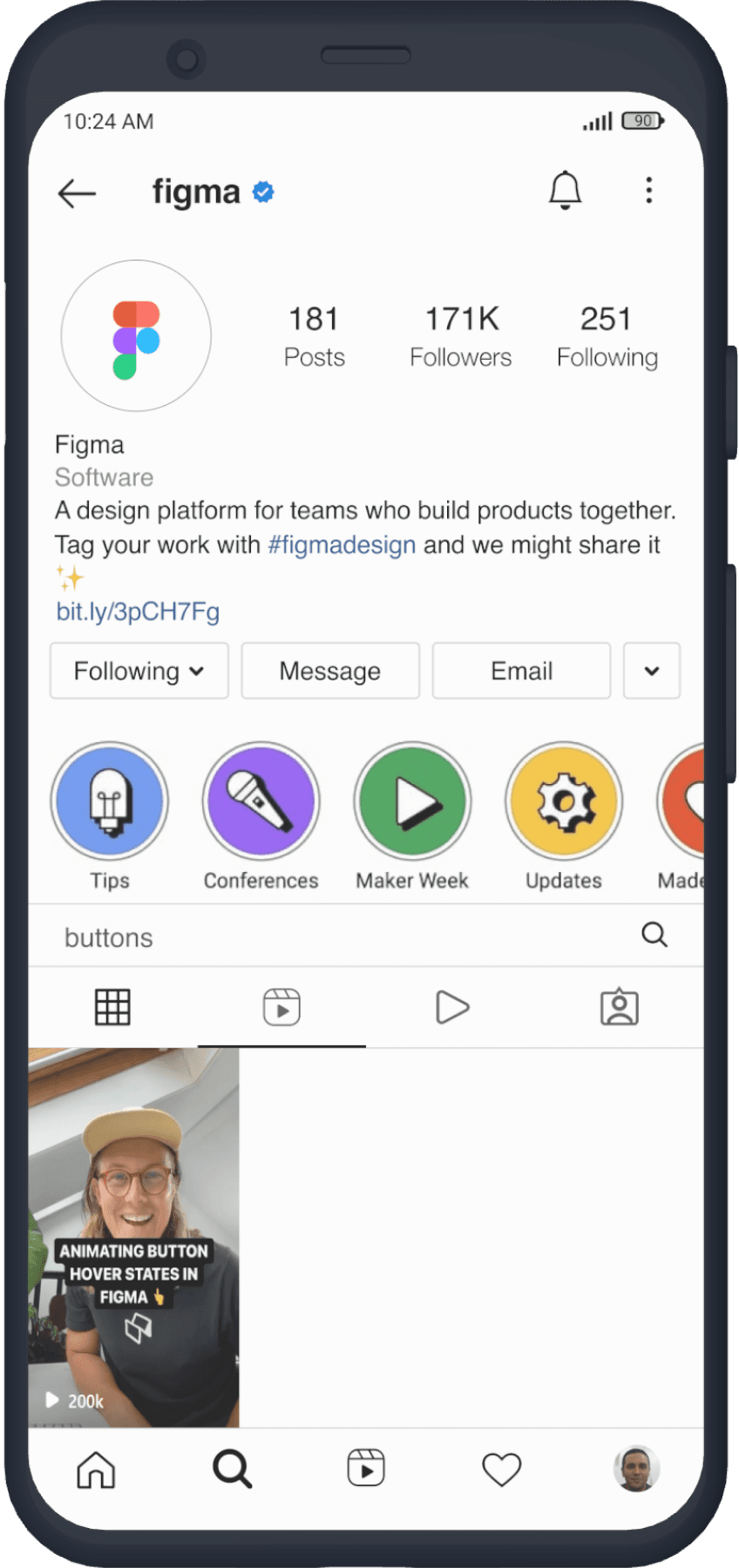
Flow 3: Searching for posts in Saved Collections
Flow 3:
Searching for posts
in Saved Collections
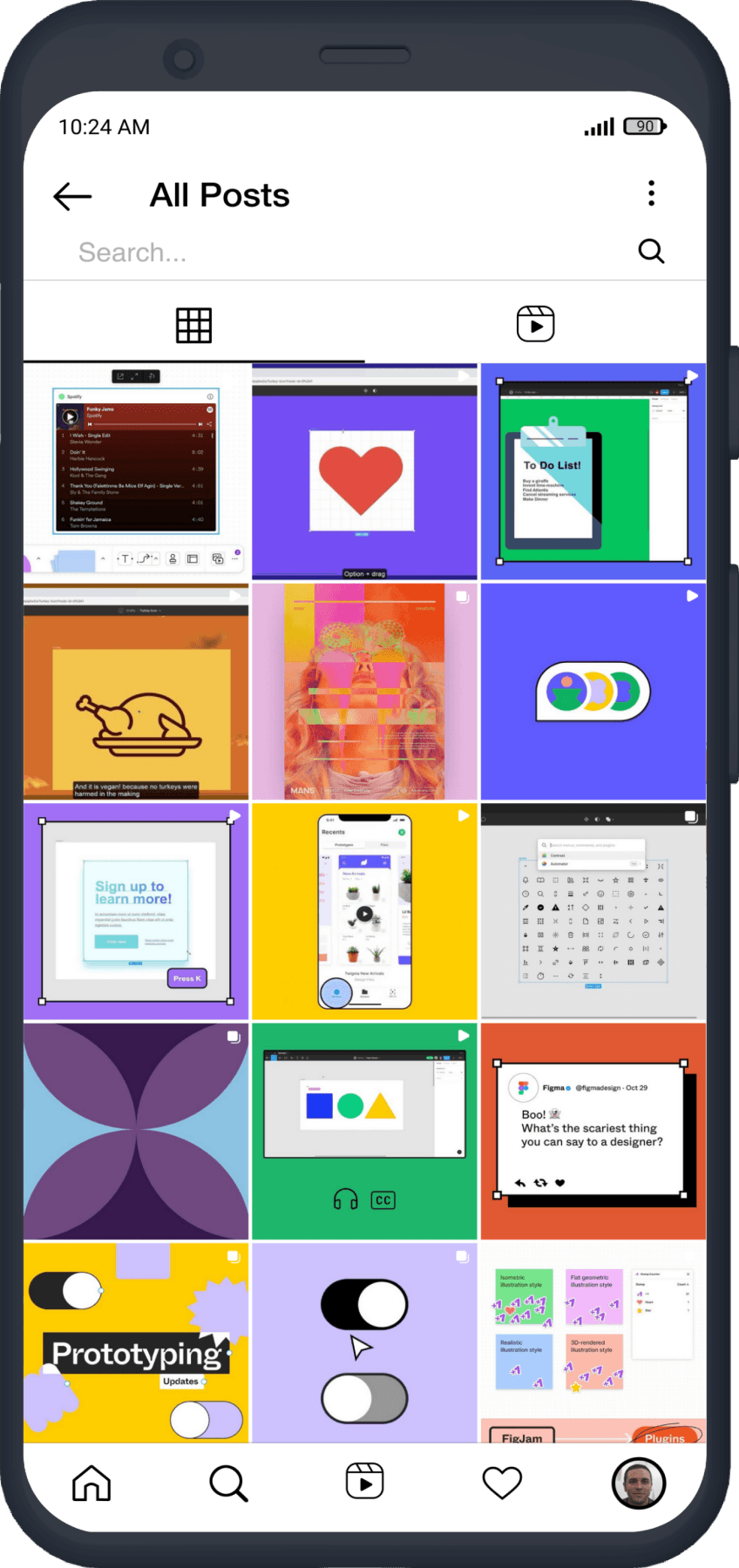
Prototyping
Validation &
Results
Validation & Results
Proving the Solution
The ultimate success of Institle was measured by its usability and its ability to solve the core problem of content findability. I conducted two rounds of testing (quantitative and qualitative) to validate the designs and ensure a low-friction user experience.
The ultimate success of Institle was measured by its usability and its ability to solve the core problem of content findability. I conducted two rounds of testing (quantitative and qualitative) to validate the designs and ensure a low-friction user experience.
Quantitative Validation
A follow-up Google Form questionnaire was circulated to confirm the severity of the problem and gauge the initial reception of the core concept.
A follow-up Google Form questionnaire was circulated to confirm the severity of the problem and gauge the initial reception of the core concept.

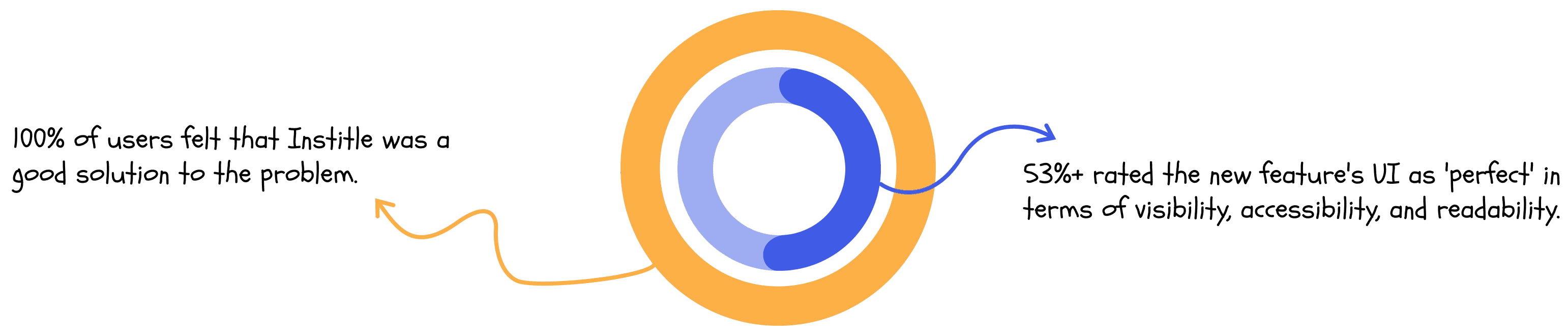
N=32
Qualitative Validation
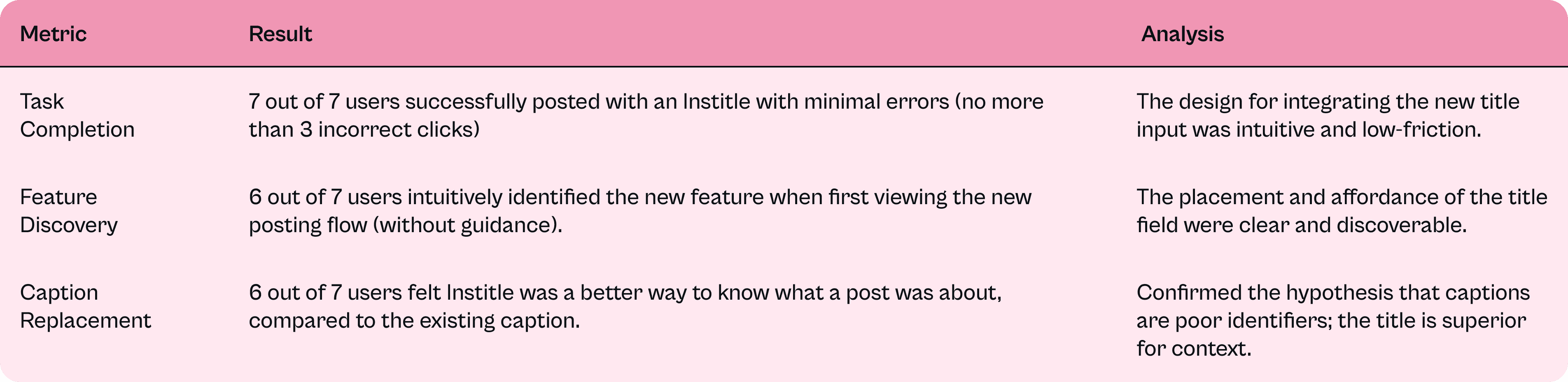
I conducted usability tests with the original interview participants via a Figma prototype to measure the ease of adoption and completion rates for the new posting flow.
I conducted usability tests with the original interview participants via a Figma prototype to measure the ease of adoption and completion rates for the new posting flow.
Key Observation
& Future Scope
Key Observation & Future Scope
One critical finding emerged during testing, requiring a documented trade-off and future scope definition:
Despite overwhelmingly positive feedback on the search function and post visibility, over 94% of users reported an unsatisfactory experience with the Institle UI for Reels. The placement of the title element interfered with core video viewing and controls.
One critical finding emerged during testing, requiring a documented trade-off and future scope definition:
Despite overwhelmingly positive feedback on the search function and post visibility, over 94% of users reported an unsatisfactory experience with the Institle UI for Reels. The placement of the title element interfered with core video viewing and controls.
Future Scope: A necessary redesign of the Institle UI for Reels is required. The focus will be on dynamic, contextual placement that appears only when the user interacts with the screen, ensuring the title remains visible without obstructing the main video content.
Future Scope: A necessary redesign of the Institle UI for Reels is required. The focus will be on dynamic, contextual placement that appears only when the user interacts with the screen, ensuring the title remains visible without obstructing the main video content.
Thank you for reading!