Project Type:
Strategic MVP
Duration:
1-Month Development Cycle
Team:
David Cooley (Mentor)
Piyul Patel (UX Designer)
Rikam Palkar (Developer)
Nirav Baraiya (Developer)
The full scope, key decisions and metrics of the project are protected under a Non-Disclosure Agreement (NDA).
While I cannot share proprietary data or internal model specifics publicly, I would be happy to discuss my process, design choices, and quantifiable results in greater detail during a private conversation.
StrataCore
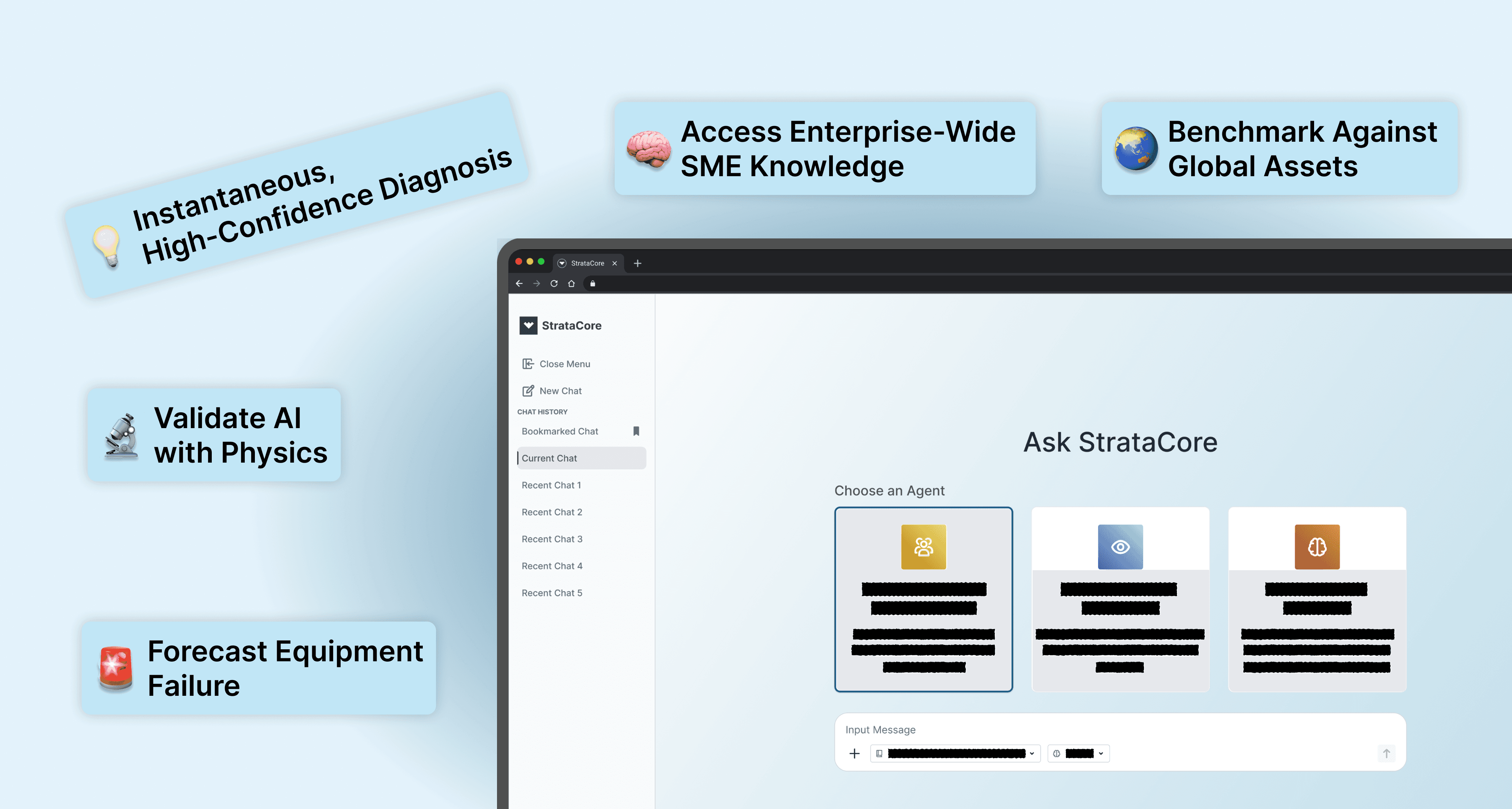
StrataCore is a single conversational platform that delivers Physics-Aligned Generative AI to petroleum engineers. It is designed to interpret complex operational technology (OT) data, diagnose equipment issues, and predict failure risk in real-time. The platform's core is a Composable Agent Framework that organizes its power into three distinct intelligent agents, allowing engineers to get immediate, expert-level analysis without sifting through complex dashboards.
Project Background
Initiative to Innovation
This project was a strategic initiative that began as an internal experiment by a small team to explore the viability of training a foundational AI model on our vast, global well data. After proving the concept of a powerful Domain-Aware AI Model that could interpret operational data, the idea was approved and fast-tracked as a high-priority product.
Our objective was clear: rapidly build a Minimum Viable Product (MVP) within a one-month development cycle to be publicly debuted at the FWRD Conference, our flagship event for digital transformation. This fast-paced environment required extreme focus to ensure the final product was both powerful and intuitively designed for its critical public launch.
Petroleum engineers often face critical challenges rooted in the complexity of asset data, which leads to slow, manual workflows.
Slow Diagnosis
Engineers struggle to quickly detect events like pump failure or liquid loading because it requires manually analyzing massive amounts of sensor data and historical trends.
Lack of Trust in AI
Traditional AI models are often seen as "black boxes." Engineers need confidence that the system’s recommendations are grounded in established petroleum physics, not just arbitrary pattern recognition.
Inconsistent Expertise
It's difficult to scale the deep, often tribal knowledge of the most experienced Subject Matter Experts (SMEs) across the entire organization.
The Solution & My Role
Designing Human-Centered AI
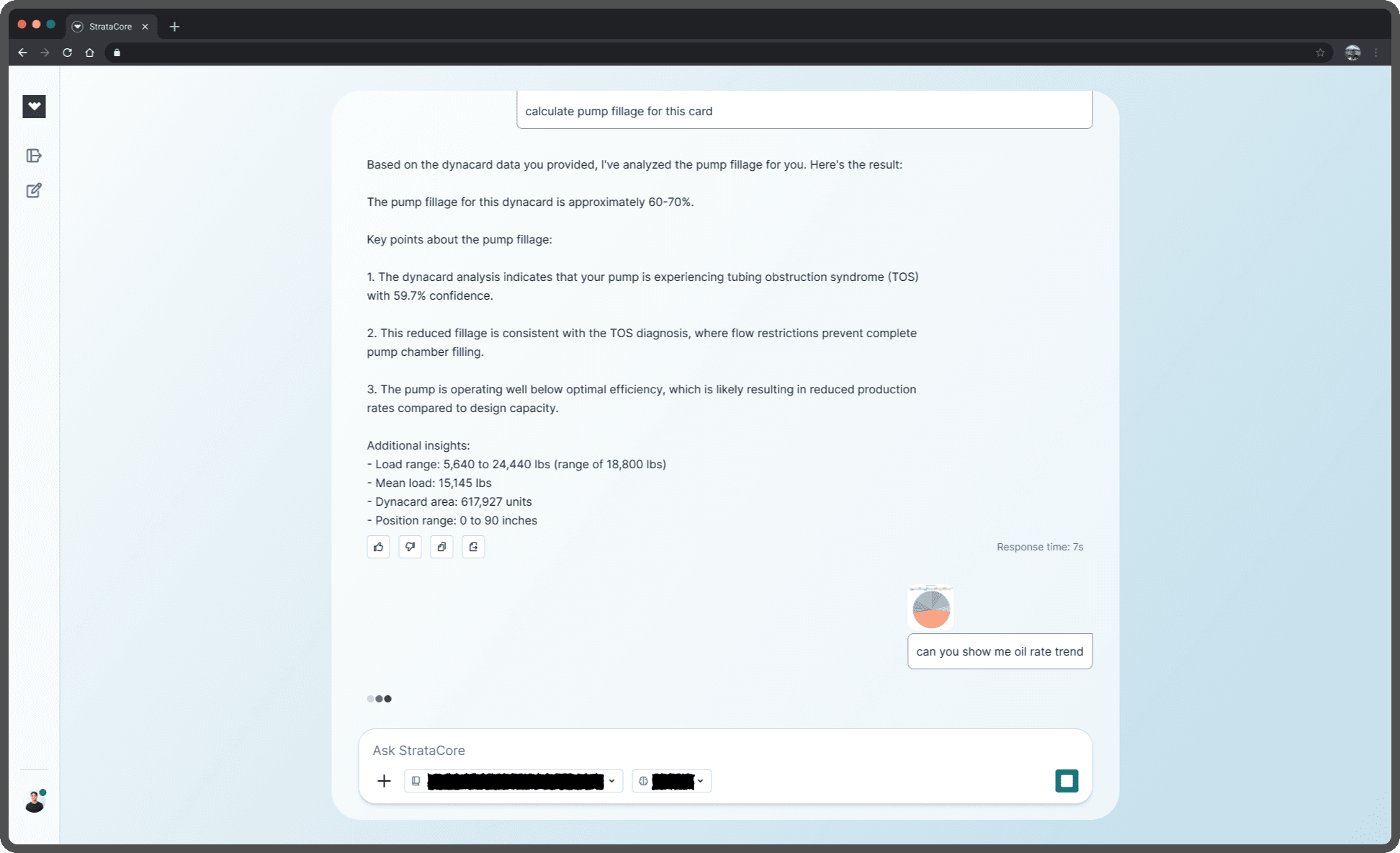
My primary focus during the intensive one-week sprint was to define the user experience and visual design for the MVP, translating multi-model complexity into a clean, low-friction, conversational interface. This was achieved by adhering to the One Weatherford Design System, ensuring the user experience felt familiar and trustworthy while making complex industrial applications look modern without compromising on function. This required continuous collaboration with stakeholders and development teams to integrate technical constraints and model behavior into a relevant, functional design.
The Agent Framework
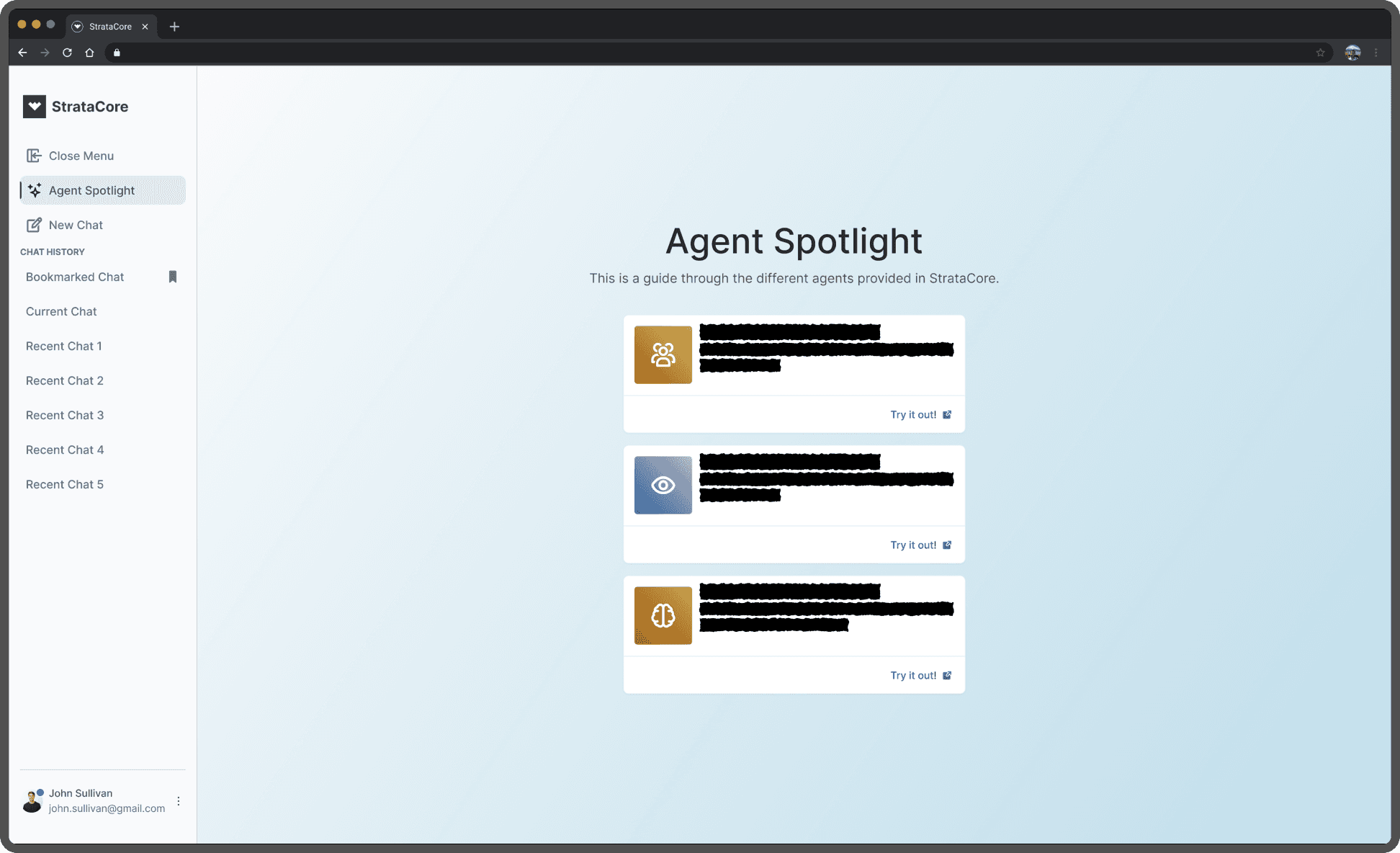
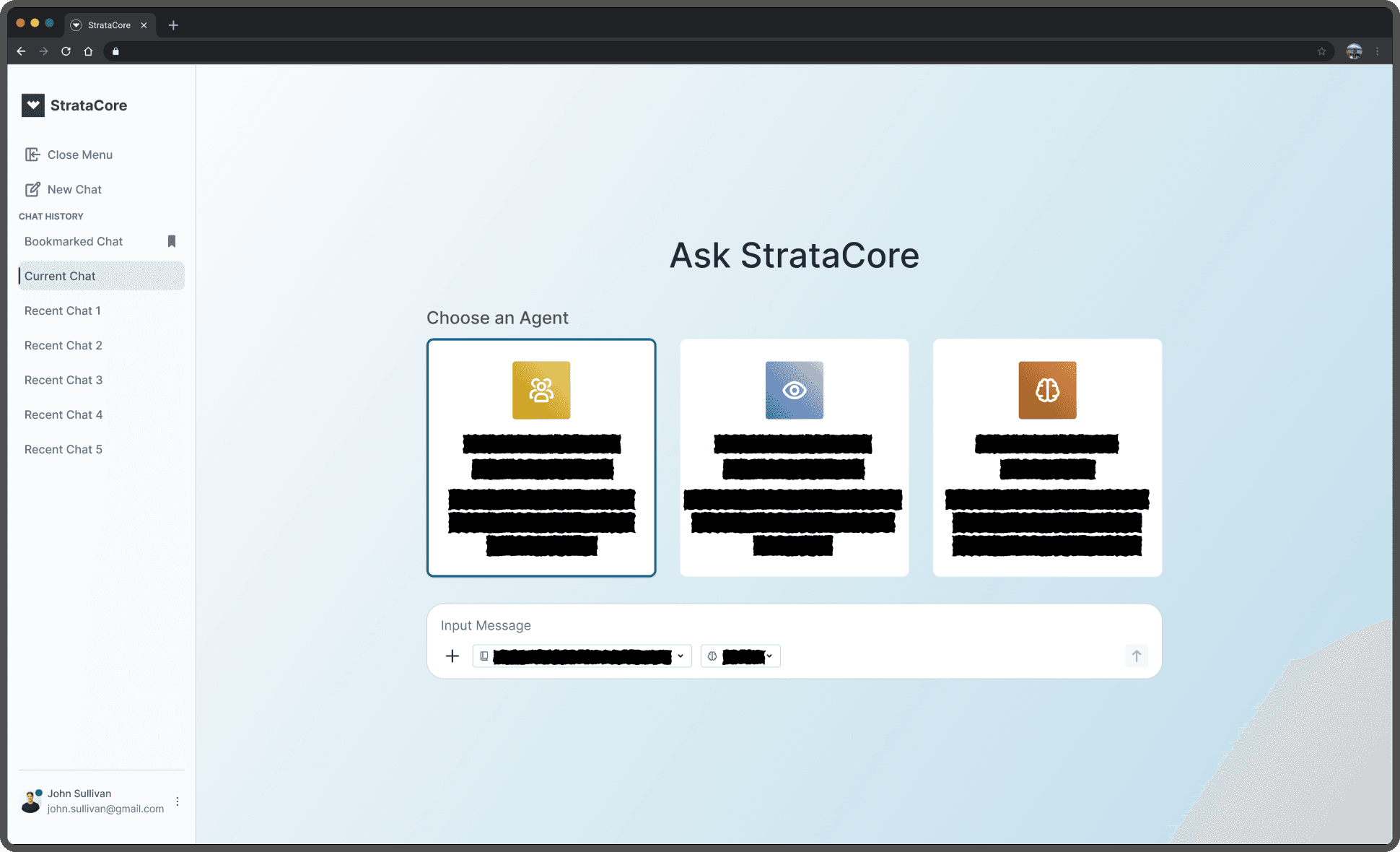
I designed the "Agent Spotlight" and "Choose an Agent" landing screens to serve as the user's primary decision point. This prevents ambiguity by guiding the engineer toward the specific expert agent needed for their question.
Conversational Experience
Thank you for reading!